
24 Jan, 2026
4 min read
James Webb Telescope Reveals Journey of Heat-Formed Minerals to Cold Comet-Forming Regions
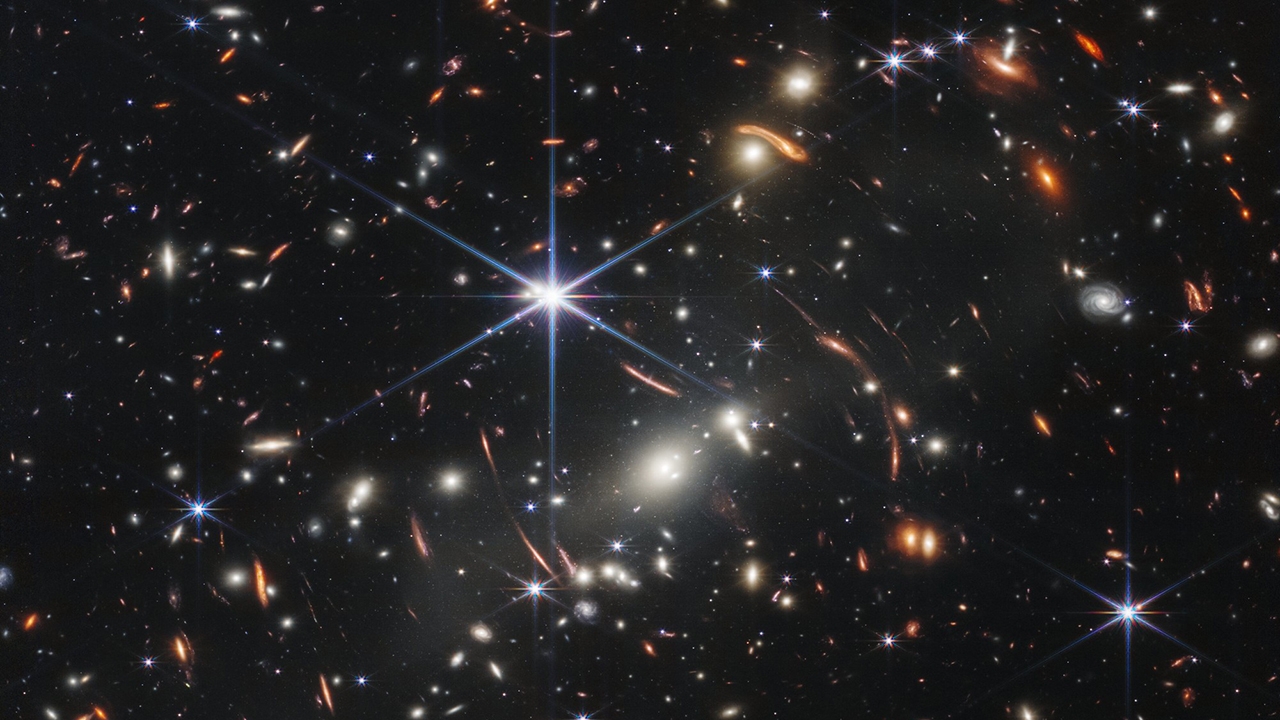
Astronomers have unveiled compelling evidence explaining how minerals created under intense heat are found within comets that originate in some of the coldest regions of planetary systems. Recent data from NASA’s James Webb Space Telescope (JWST) demonstrate that crystalline silicates, minerals formed only at very high temperatures, are initially produced near young stars before being propelled outward to the frigid outskirts where comets develop.
Published on June 18 in the journal Nature, the study provides the clearest observational proof yet of the process transporting these heat-formed minerals from hot inner protoplanetary disks to the icy peripheries of planetary systems, a phenomenon previously theorized but never directly witnessed.
From Stellar Furnace to Frozen Frontier
Crystalline silicates have been detected within comets of our own solar system, despite their residence in extremely cold environments such as the Kuiper Belt and Oort Cloud. Until now, the mechanism behind the delivery of such minerals from hot stellar environments to these distant, cold regions remained a mystery.
The JWST’s detailed observations of a young star known as EC 53, located approximately 1,300 light-years away in the Serpens Nebula, shed light on this enigmatic process. The telescope identified crystalline silicates forming in the innermost, hottest section of the star’s gas and dust disk—comparable to the zone between the Sun and Earth in our solar system.
More significantly, JWST detected powerful stellar winds and outflows emanating from EC 53 that appear to act as conveyors, transporting these minerals outward across the disk. Jeong-Eun Lee, lead author and researcher at Seoul National University, described the process: "These layered outflows appear to lift crystalline silicates and transport them outward, like a cosmic highway."
Unique Patterns in a Young Star
EC 53 is notable for its predictable activity cycles, undergoing major outbursts approximately every 18 months that last for about 100 days. During these episodes, the star rapidly accretes gas and dust from its surrounding disk while simultaneously ejecting material through jets and winds. Scientists propose that these expulsions are responsible for carrying crystalline silicates to more distant, colder regions where comet precursors may form.
Utilizing JWST’s Mid-Infrared Instrument (MIRI), researchers detected specific minerals such as forsterite and enstatite—both commonly found on Earth—near the star. They mapped the distribution of these minerals during both quiescent phases and outbursts, providing insight into their movement.
Doug Johnstone from the National Research Council of Canada, co-author of the study, emphasized the significance: "Silicates are the main building blocks of rocky planets like Earth. Seeing these same minerals forming and moving through another planetary system is extraordinary."
Implications for Planetary Formation
The findings clarify why crystalline silicates have been identified not only in comets within our solar system but also in disks surrounding other stars. Prior to this study, there was no direct evidence of the transportation mechanisms enabling mineral migration over vast distances.
Moreover, JWST captured high-resolution images of EC 53’s fast-moving jets of hot gas as well as slower, cooler outflows rising from the protoplanetary disk. These dynamic processes play a crucial role in material redistribution across the entire system.
Joel Green, an instrument scientist at the Space Telescope Science Institute, remarked, "It’s not just what Webb can see, but where it sees it. We can now track how these tiny particles—much smaller than grains of sand—are created and spread throughout a young star system."
A Window Into Our Solar System’s Origins
Still embedded deeply in its dusty cocoon and expected to remain so for roughly 100,000 more years, EC 53’s ongoing evolution offers a snapshot of early planetary system development. Over millions of years, collisions among dust grains and pebbles within its disk could lead to the formation of larger bodies, eventually giving rise to planets.
Scientists believe this sequence closely mirrors the history of our own solar system, which formed billions of years ago and now contains planets, comets, and an abundance of crystalline silicates.
The James Webb Space Telescope, managed by NASA in collaboration with the European Space Agency and the Canadian Space Agency, continues to revolutionize our understanding of star and planetary system formation as well as the distribution of planetary ingredients across the universe.
Recommended For You
Cebu Officials Outline Strategic Development and Flood Management Plans
Jan 24, 2026
Christine Reyes

Audit Reveals Unbuilt Farm-to-Market Roads in Davao Occidental Valued at P100 Million
Jan 24, 2026
Isabella Garcia

DigiPlus Interactive Plans Soft Launch in South Africa by Early 2027
Jan 24, 2026
Katrina Mercado

Fire Destroys 30 Houses in Lapu-Lapu City’s Barangay Buaya
Jan 24, 2026
Katrina Mercado